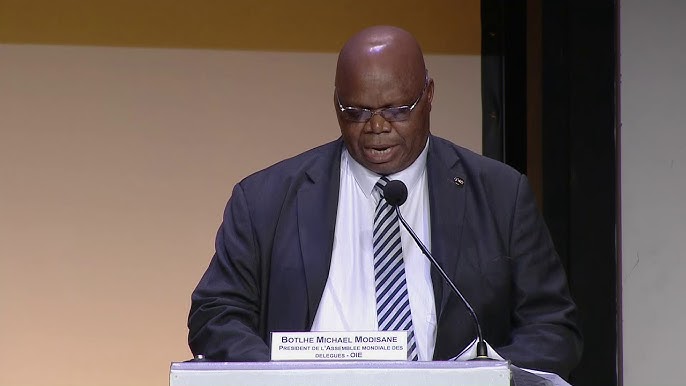
Dr Mike Modisane, South African Representative to the World Organisation for Animal Health
The World Organisation for Animal Health (WOAH) is reviewing its international standards on the welfare of animals during transport — rules that help shape national policy around the world. As part of this consultation, Stop Live Export South Africa has submitted a detailed letter to South Africa’s WOAH representative, Dr Botlhe Michael Modisane, urging stronger protections for animals during transport while recognising that the inherent welfare problems of long-distance live export can ultimately only be addressed by replacing the trade with alternatives such as meat carcasses. The submission is endorsed by other South African animal protection organisations.
Below is the full text of the letter submitted on 12 June 2026.
[Download the full PDF]
WOAH consultation on draft Chapter 7.2:
Animal welfare during transport
Our letter to Dr Botlhe Michael Modisane, the South African Representative to the World Organisation for Animal Health (WOAH)
Dear Dr Modisane,
We sincerely welcome the World Organisation for Animal Health’s (WOAH) revision of its animal transport standards, in particular the development of a consolidated Chapter 7.2 on ‘Animal welfare during transport’.
We take this opportunity to present a number of recommendations.
We call on you, as South Africa’s Veterinary Authority representative, to use this opportunity to advocate for stronger standards, in line with the growing body of animal welfare science demonstrating that the long-distance transport of live farmed animals causes pain and suffering.
As we observe positive policy change globally to end the trade — including bans on live exports from the United Kingdom and New Zealand, Australia’s forthcoming ban on live sheep exports by sea, and Germany’s withdrawal of veterinary export certificates for several categories of live animals destined for third countries — we welcome all effective measures to improve welfare, reduce journey lengths and ultimately end this cruel and unsustainable trade.
We therefore urge you, in your role as a WOAH member, to use the current revision as a critical opportunity to bring the long-distance transport of live animals to an end. This principle is already recognised in both the current Terrestrial Animal Health Code and the draft consolidated Chapter 7.2, which states:
- Longer journeys increase risks to animal welfare, and recommends that:
- Journeys should be kept as short as possible.’
We urge that these principles underpin the revised global standards for the transport of live animals and that you work with the relevant officials within South Africa’s Department of Agriculture to replace the live export trade with alternatives such as meat carcasses.
We also call on South Africa to adopt national, time-bound commitments to phase out the long-distance transport of live animals.
Welfare problems associated with long journeys
Recent media reports have highlighted how ships carrying cattle and sheep have been diverted to conflict-affected regions because of geopolitical instability, placing both crew and animals at risk of prolonged delays, injury and death.
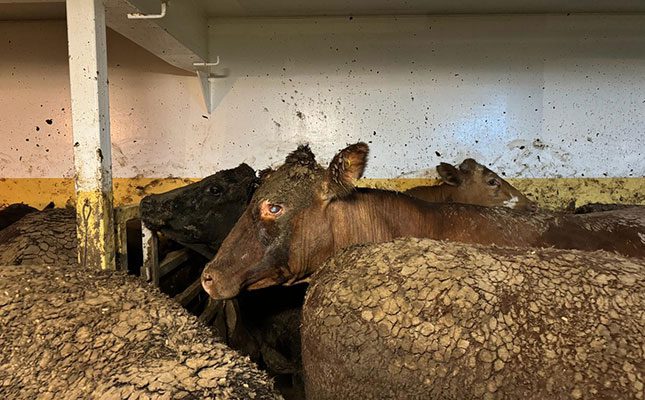
Most very long journeys occur by sea. Years of experience, together with veterinary reports, demonstrate that these voyages frequently involve serious welfare problems, including:
- large accumulations of faeces and slurry in animal pens
- wet and heavily soiled bedding
- dirty feed and water troughs
- overcrowding
- high temperatures, extreme humidity and inadequate ventilation
- injuries, some requiring euthanasia.
Long road journeys also pose significant welfare risks. Particularly where vehicles are overcrowded and temperatures are high, animals become increasingly exhausted, dehydrated and stressed. Some are injured or collapse onto the floor of the truck, where they risk being trampled by other animals.
The long-distance transport of animals in crowded, stressful, hot and unsanitary conditions may also compromise their immune systems, making them more susceptible to infectious diseases, including zoonotic diseases. These pathogens may spread during transport, increasing the risk of transboundary disease transmission and, ultimately, future pandemics.
Some welfare harms are inherent in long journeys
While stronger WOAH recommendations are essential, it is important to recognise that certain welfare harms are inherent in long-distance transport by sea.
In a statement published in April 2026 regarding proposed South African regulations, the South African Veterinary Association (SAVA) noted:
‘Inherent harms are those that are a fundamental part of every sea voyage. These include the motion of the vessel on the water, challenges inspecting and caring for vast numbers of animals, and the accumulation of excrement and ammonia.’
SAVA concludes:
‘No amount of regulation is able to prevent the inherent harms associated with live export by sea, with the resultant suffering experienced by the animals on board.’
In light of these inherent harms, we believe the global community should move away from the long-distance transport of live farmed animals.
We welcome the growing number of veterinary associations supporting this approach through the WOAH consultation process and through public statements.
WOAH’s draft recommendations
We would like to highlight four key recommendations that could help reduce the worst welfare impacts while efforts continue towards ending long-distance transport.
Veterinary presence
A veterinarian should accompany animals on all sea journeys exceeding three days. Without a veterinarian on board, there is no suitably qualified professional to treat injured or sick animals or respond effectively to disease outbreaks.
Protection of vulnerable animals
The transport of vulnerable animals should be kept as short as possible. This includes pregnant animals, unweaned animals, and those at the end of their productive lives, such as cull cows and sows.
No transport without clear authority
Some of the most serious welfare failures occur when consignments are rejected by buyers or refused entry by importing countries, leaving animals stranded at sea for weeks or even months.
Accordingly, the competent authority in the exporting country should not permit consignments to depart unless both the buyer and the competent authority in the importing country have provided signed confirmation that all animal health guarantees and import requirements have been met.
Vessels fit for purpose
Ships across all sectors are, on average, scrapped at around 29 years of age. Many livestock carriers, however, are considerably older and were originally built for other purposes before being converted to transport animals.
Maintaining acceptable welfare standards on these vessels is particularly challenging. Converted ships may also have reduced stability and an increased risk of capsizing.
Accordingly, vessels over 30 years old, and those converted from other purposes, should not be used to transport animals unless a rigorous survey certifies that they are safe and capable of meeting WOAH animal welfare standards, including the provision of effective ventilation.
Conclusion
During this revision of WOAH’s animal transport recommendations, we respectfully urge you to engage actively in the consultation process to strengthen the organisation’s global guidance and to work nationally towards replacing the live export trade with alternatives such as meat carcasses.
This is essential to improve animal welfare, reduce disease risk, and end the transport of animals to conflict-affected regions and countries that repeatedly fail to enforce animal welfare legislation.
These revisions should be an important step towards ending the long-distance transport of live farmed animals worldwide and replacing it with the transport of carcasses, meat, milk powder and genetic material.
Yours sincerely,
Karen de Klerk
SLE Government Liaison Manager
Endorsed by the following South African animal protection organisations
References
- European Food Safety Authority (2022). Welfare of cattle during transport. EFSA Journal.
- EFSA. Plain Language Summary – Welfare of cattle during transport.
- EURCAW. Summary of EFSA Scientific Opinion.
- WOAH Europe. Summary of EFSA transport findings.
- Earley B, Buckham Sporer K, Gupta S. (2017). Relationship between cattle transport, immunity and respiratory disease. Animal.
- Qi J. et al. (2024). Multi-omics investigation into long-distance road transportation effects on respiratory health and immunometabolic responses in calves. Microbiome.
- Jakes GM. et al. (2025). Transport stress induces paradoxical increases in airway inflammatory responses in beef stocker cattle. PLOS ONE.
Join the movement to stay informed
- Sign the Petition to ban live export by sea
- Subscribe to the Stop Live Export SA newsletter
- Facebook: Stop Live Export SA
- Instagram: @stoplxsa
- Website: stopliveexport.co.za