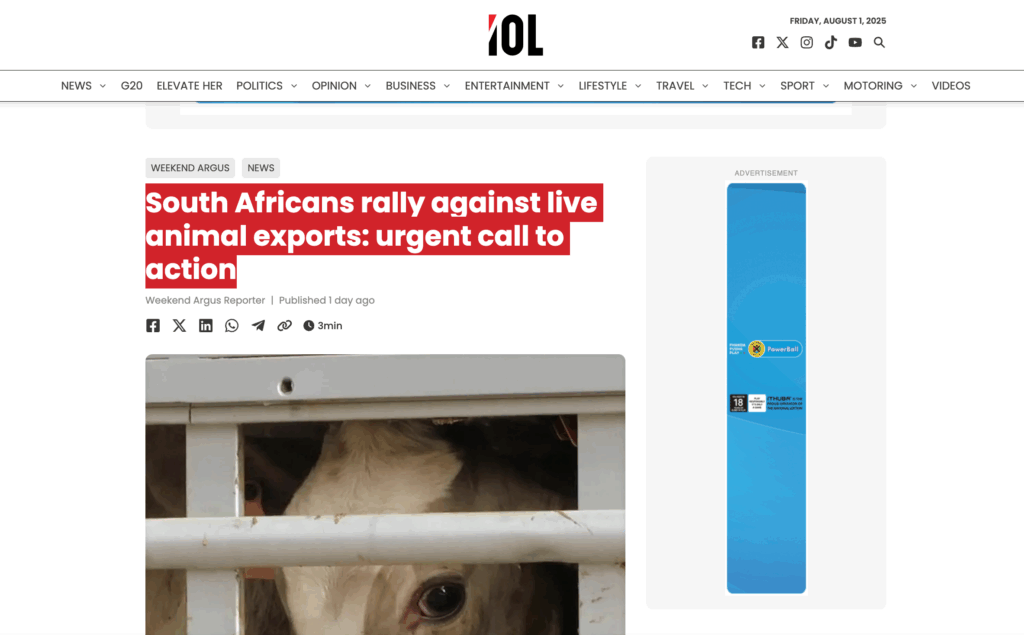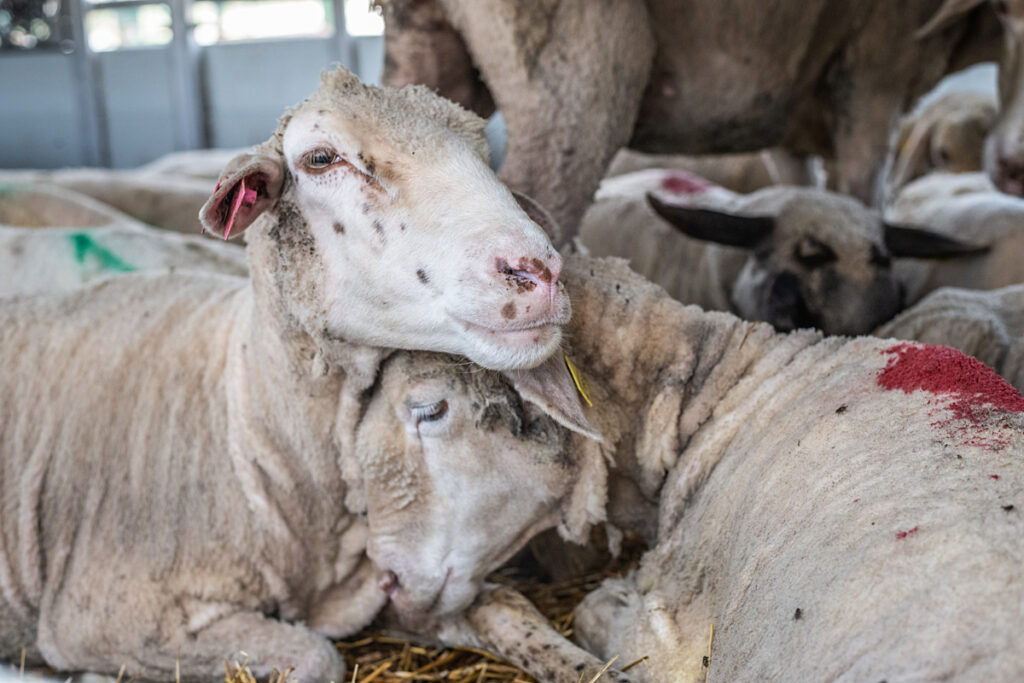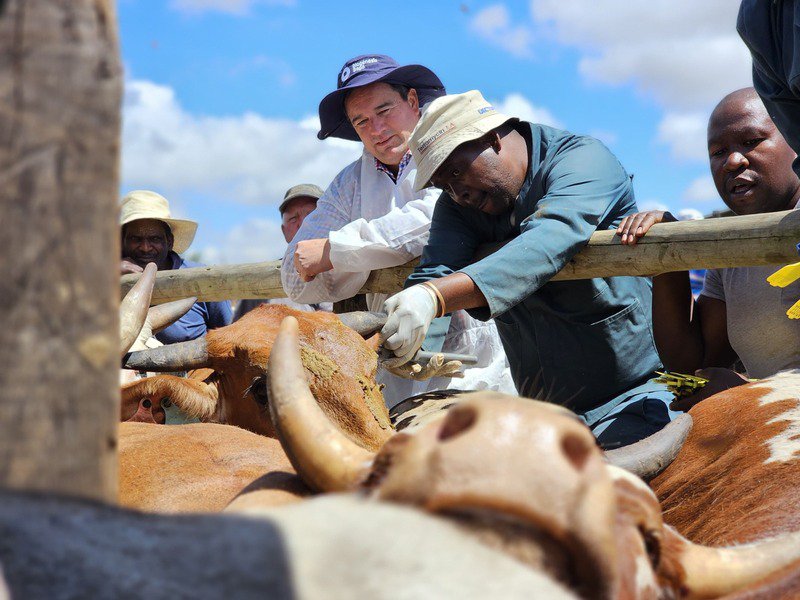
Animal welfare organisation Stop Live Export South Africa has issued an open letter to the Minister of Agriculture calling for the immediate suspension – and eventual permanent prohibition – of live animal exports. The appeal comes in response to the ongoing outbreak of Foot and Mouth Disease (FMD), which has been declared a national disaster.
In the letter, the organisation argues that the movement, aggregation and long-distance transport of animals inherent to the live export trade significantly increase the risk of disease spread at a time when strict containment is critical. It warns that continued exports could deepen the outbreak, threaten South Africa’s agricultural economy, and expose the country to trade restrictions and reputational harm.
The group is urging the government to act decisively to limit animal movement, protect the national herd, and prevent avoidable animal suffering – both in the current crisis and in the long term.
Read Stop Live Export SA’s letter
The Honourable Minister of Agriculture
Republic of South Africa
26 February 2026
Open Letter: Urgent Suspension and Permanent Prohibition of Live Animal Exports due to Foot and Mouth Disease Outbreak
Dear Minister,
South Africa is currently facing widespread and deeply concerning outbreaks of Foot and Mouth Disease (FMD). As you are aware, FMD is a highly contagious viral disease that spreads through direct contact, aerosols, contaminated equipment, vehicles, clothing and vessels, and survives for extended periods under certain conditions. Containment requires strict limitation of animal movement and rigorous biosecurity controls.
Live animal export operations inherently undermine these containment efforts. The process involves the long-distance transport of animals across provinces, the aggregation of animals from multiple farms, holding facilities and feedlots, port operations, and prolonged sea voyages. Each stage creates mixing points that significantly increase the risk of disease transmission. When FMD is already circulating domestically, such large-scale movement materially elevates the risk of further internal spread and potential international dissemination.
The economic stakes are substantial. FMD outbreaks trigger import bans, restrict market access for meat and animal products, and damage South Africa’s agricultural credibility. The broader livestock sector, rural livelihoods and national food security are placed at risk. The limited commercial benefit derived from live exports cannot outweigh the systemic economic harm that a worsening or prolonged outbreak would cause.
In addition, there is a heightened risk that importing countries may suspect the presence of FMD upon the animals’ arrival. This creates a real possibility that shipments could be rejected at the receiving port, leaving animals stranded with no clear destination. Such a scenario would not only cause severe animal welfare concerns but would also expose South Africa to reputational damage and further trade repercussions.
Animal welfare considerations are equally pressing. FMD causes fever, painful lesions, lameness and, in severe cases, death. Transport stress lowers immunity and increases susceptibility to infection. Animals incubating the disease may deteriorate during lengthy sea voyages, where adequate veterinary intervention is limited. Government has a duty to prevent avoidable suffering, particularly in circumstances where risk is foreseeable.
Importantly, FMD has now been declared a national disaster. The official government communication states: “I hereby…in terms of section 22(a) of the Act…read with section 20(2) of the Act – encourage organs of state, the private sector, communities and individuals to refrain from practices that may increase the risk of the spread of the foot and mouth disease.”
Live animal export, which depends on large-scale aggregation and long-distance transport of cloven‑hoofed animals, clearly falls within the category of practices that may increase the risk of spread. In light of this declaration, it is both reasonable and necessary that such activities be prohibited.
We therefore respectfully call for the immediate suspension of all live animal exports for the duration of the current outbreak. Reducing animal movement is a cornerstone of effective disease control. A temporary suspension is not only justified but essential to protect the national herd and the broader agricultural economy.
However, we submit that the case extends beyond the present crisis. The inherent biosecurity risks associated with live animal export – including aggregation, transport stress, prolonged voyages, and international exposure – create ongoing vulnerability to future outbreaks. After the significant effort and expense required to bring the current outbreak under control, South Africa simply cannot afford a recurrence triggered by avoidable risk.
Accordingly, while an immediate suspension is urgently required during this acute phase, we further urge government to place a permanent prohibition on the export of live animals. A permanent ban would align with precautionary biosecurity governance, safeguard long-term trade interests, and ensure that future outbreaks are not facilitated by a transport model that is intrinsically high-risk.
This request is further endorsed by the following leading animal welfare and protection organisations:
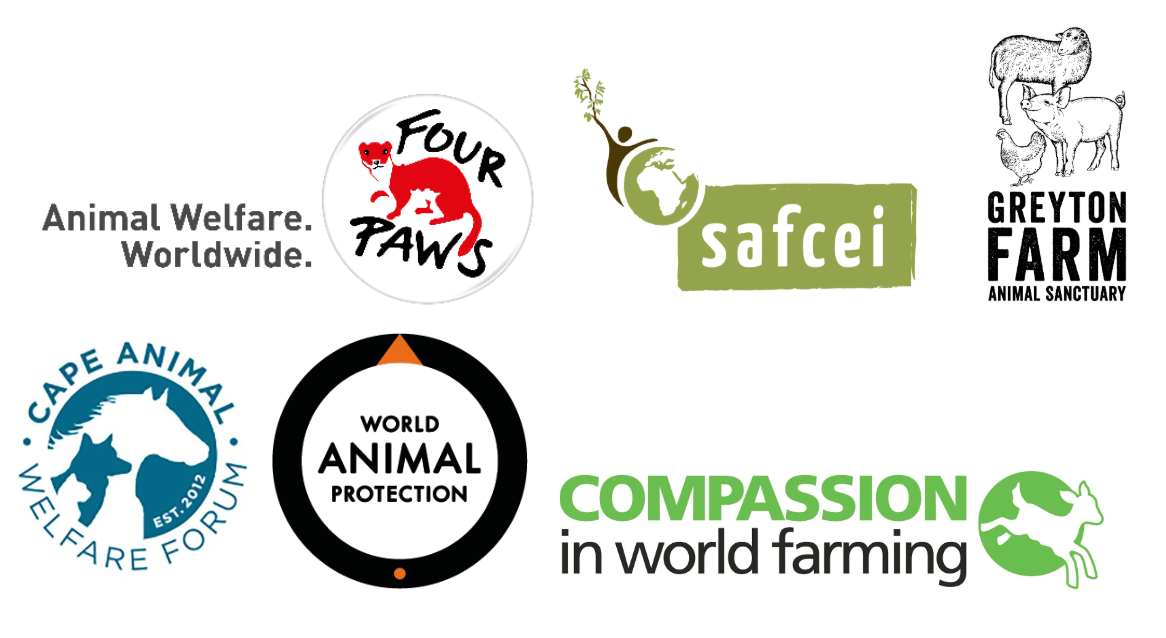
These organisations collectively recognise the urgent biosecurity, economic and animal welfare risks posed by continued live animal exports during the current Foot and Mouth Disease outbreak, and support both the immediate suspension and the adoption of a permanent prohibition in the national interest.
We trust that you will act decisively in the national interest to protect animal health, economic stability, and animal welfare.
Yours sincerely,
The Executive Committee
STOP LIVE EXPORT SOUTH AFRICA
Download a copy of the letter [PDF]
Read more
- Parliament briefing: Live export cannot be regulated, it must be stopped
- Expert testimony: Why life export by sea cannot be made humane
Join the movement to stay informed
- Sign the Petition to ban live export by sea
- Facebook: Stop Live Export SA
- Instagram: @stoplxsa
- Website: stopliveexport.co.za
- Subscribe to the Stop Live Export SA newsletter