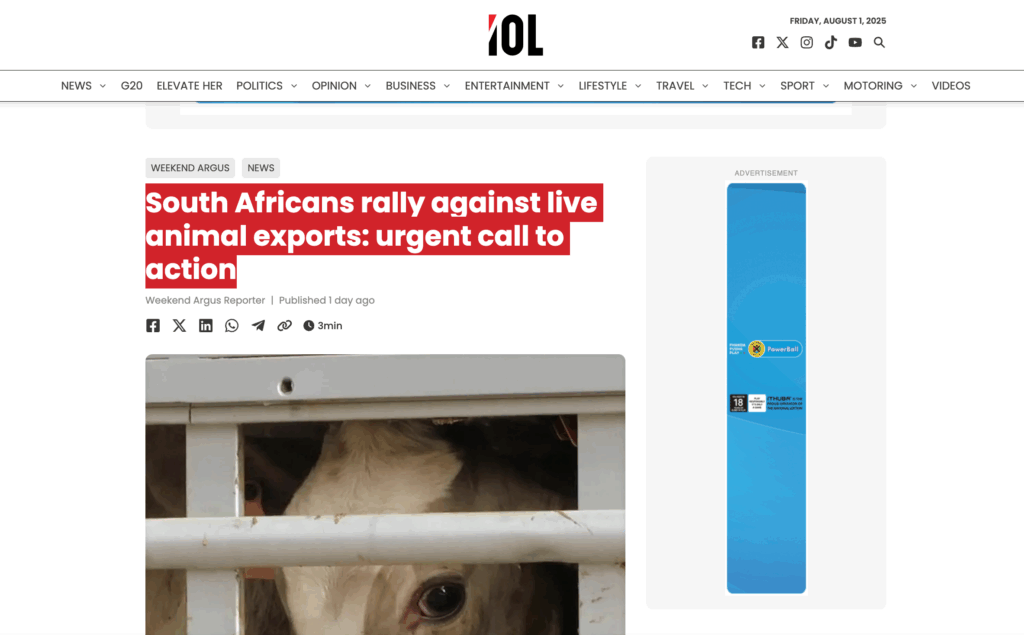
When the Spiridon II left Montevideo on 21 September 2025 with 2,901 cattle bound for Türkiye, nothing about her marked her out from the dozens of similar ships crossing the world’s oceans that week.
She was 53 years old, converted from a general cargo ship in 2011, and had already racked up a dozen detentions in her working life. The voyage took roughly 30 days. When she reached Bandırma on 22 October, Turkish inspectors found the paperwork didn’t match the cargo: 146 cattle with no identification, 469 animals not listed for import, 58 already dead.
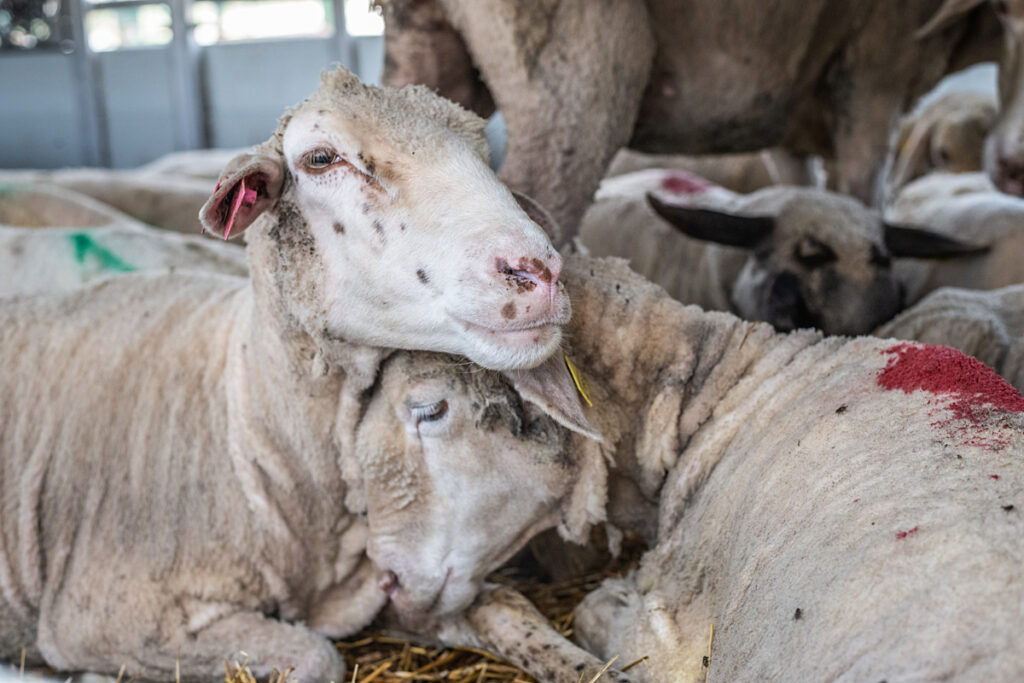
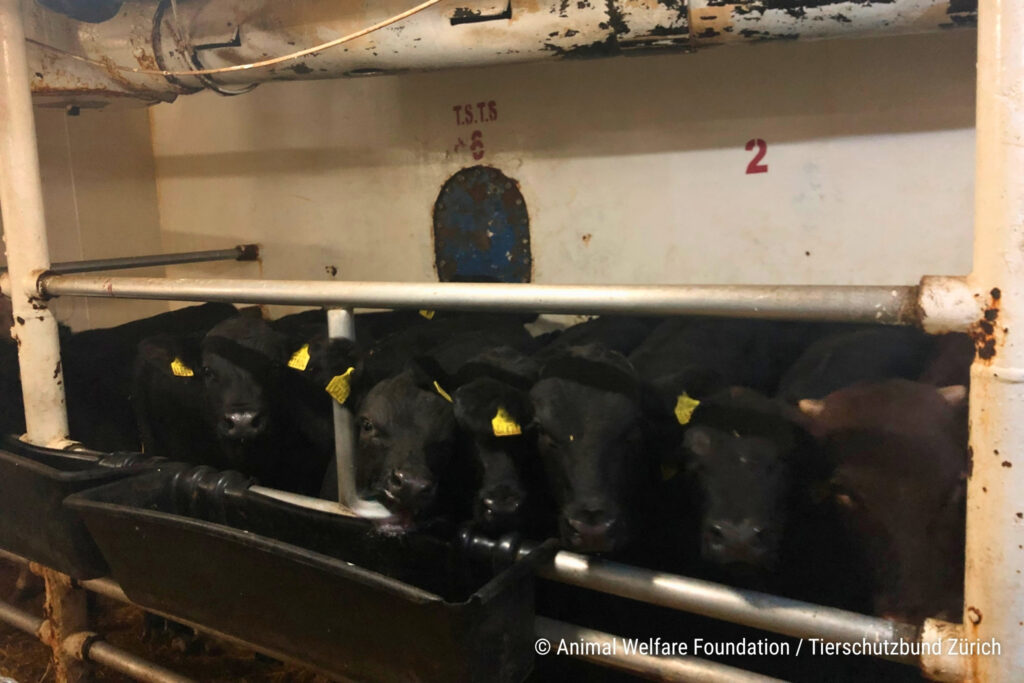
Of the roughly 140 pregnant heifers said to have calved en route, only 50 calves could be found. Unloading was refused. The ship sat off the Turkish coast for weeks – video from on board showed cattle standing in deep manure, overcrowded pens, dying animals – before she finally left Turkish waters on 14 November, still carrying whatever remained of her cargo, bound, officially, back to Uruguay.
It would be easy to read the Spiridon II as a single, extreme case. The 2026 Global Livestock Fleet Report – published this week by Robin des Bois, the Animal Welfare Foundation and Tierschutzbund Zürich, and the most comprehensive audit of the global livestock fleet ever undertaken – argues that she is something else: the predictable output of a fleet that was never built for the job it now does.
A fleet that was never meant for this
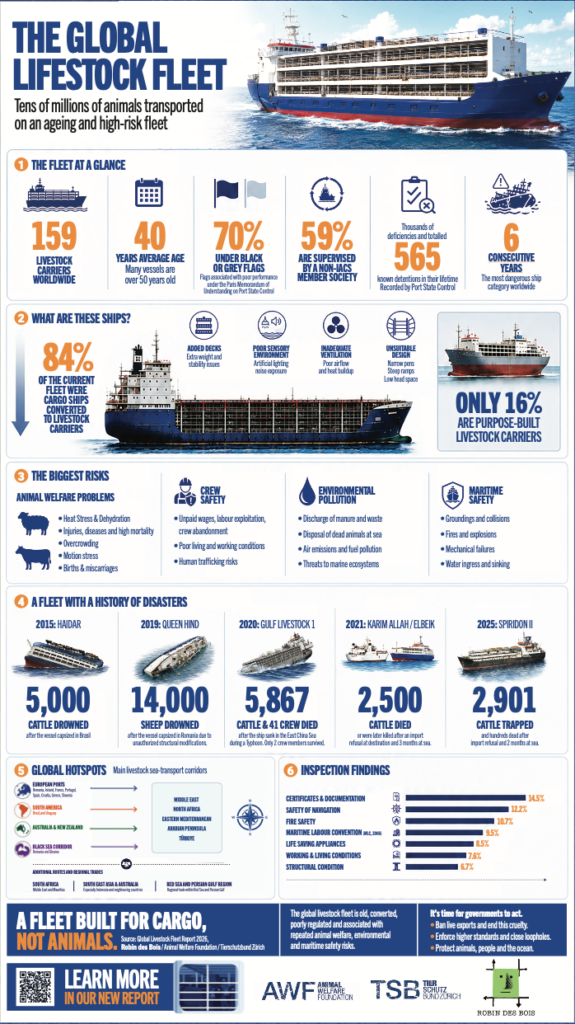
Researchers examined all 159 officially registered livestock carriers operating worldwide. Just 25 were purpose-built for the trade. The other 134 – 84% of the fleet – started out as something else: general cargo ships, car carriers, reefers, later stripped out and refitted to carry animals instead of freight.
Those converted vessels average 45 years old. In most branches of shipping, a ship that age would already have been scrapped. Instead, they’re still crossing open ocean loaded with cattle and sheep, carrying an average of 242 recorded technical deficiencies apiece and four detentions each over their working lives.
The distinction between cargo and cattle matters more than it might sound. A hold built for containers doesn’t stop being that hold once someone bolts in pens. Animals need feeding, watering and ventilation for thousands of bodies confined below deck for weeks. They fall ill, give birth, die. Steel doesn’t.
The report draws on the Paris Memorandum of Understanding’s 2024 annual report, which ranked livestock carriers the worst-performing category in commercial shipping – for the sixth consecutive year. In 2024, 88% of livestock carrier inspections turned up deficiencies. The detention rate reached 15%, nearly four times the average across all inspected shipping.
- Read the full 2026 Global Livestock Fleet Report [PDF]
Not bad luck – a pattern
Around a third of the fleet – 50 ships – were found in breach of MARPOL environmental rules. Sixty vessels showed labour violations: crew accommodation, working conditions, wages. Nearly half the fleet flies a flag on the Paris MoU black list, and more than half is registered through shell companies, often single-ship entities, that make it hard to hold anyone accountable when something goes wrong.
Animal welfare, maritime safety, environmental law, labour rights: on this fleet, they’re not separate failures. They’re the same failure, repeated.
South Africa is part of this trade
South Africa’s live export volumes are modest next to Uruguay’s, Australia’s or Brazil’s. But that’s beside the point the report is making. Animals shipped out of East London enter exactly the same global fleet as the Spiridon II – the same converted hulls, the same black-listed flags, the same shell-company ownership, the same absence of anyone clearly accountable when a voyage goes wrong. There is no separate, safer shipping lane for South African animals. There is one fleet, and this report has just shown, in more detail than ever before, what that fleet actually looks like.
Why this report matters now
Most coverage of live export tends to focus on a single voyage or a single tragedy, then moves on. This report refuses that framing. It asks why an industry moving tens of millions of sentient animals a year is still running on ships designed to carry containers, and why vessels with decades of documented failure are allowed to keep sailing. Those are questions for the governments that licence exports, the flag states that register these ships, the port authorities meant to inspect them, and the buyers and consumers at the end of the chain who rarely see what happens between departure and destination.
For Stop Live Export South Africa, the report confirms what campaigners here have argued for years: this isn’t a story about one badly run ship or one unlucky voyage. It’s a structural problem, and structural problems don’t get solved by tightening inspections on an ageing fleet – they get solved by ending the trade that keeps that fleet at sea.
What you can do
Read the report. Share it. Write to your local representative or the Department of Agriculture asking where South Africa stands on live export reform.
Support the organisations, like Stop Live Export SA, pushing for a shift to chilled and frozen meat exports instead of live animals – a change that removes the welfare risk at sea entirely, rather than trying to manage it. Sign our petitions, sign up for our newsletter and join our protests. Make your voice matter!
- Read the full 2026 Global Livestock Fleet Report and explore the data behind the world’s live export fleet.
Join the movement to stay informed
- Sign the Petition to ban live export by sea
- Subscribe to the Stop Live Export SA newsletter
- Facebook: Stop Live Export SA
- Instagram: @stoplxsa
- Website: stopliveexport.co.za