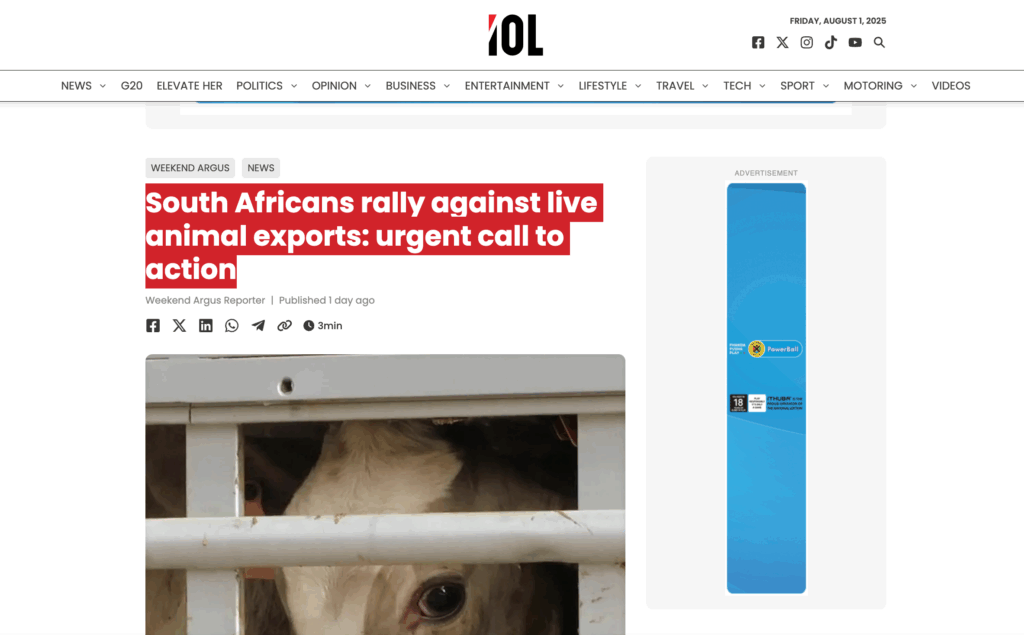
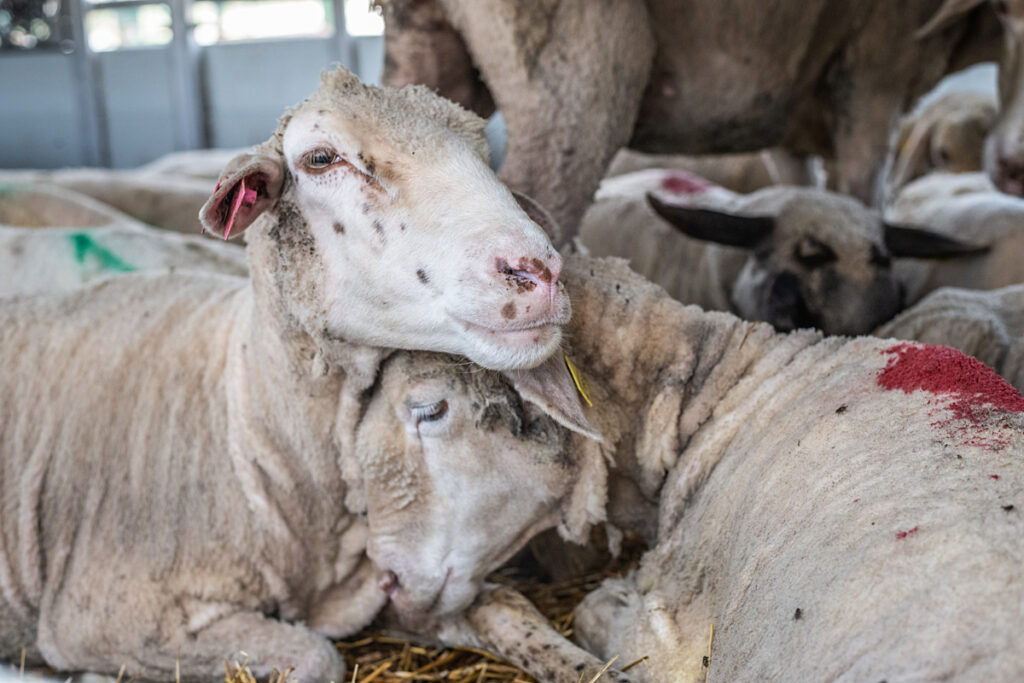
A video message from well-known Australian veterinarian Dr Lynn Simpson – specially recorded for this briefing – was presented by SLESA to the Parliamentary Portfolio Committee on Agriculture on 18 November.
Dr Simpson, who has accompanied 57 live-export shipments in her career, told Committee Members that ‘there is no way this trade can be fixed or managed to provide an acceptable risk to the animals involved’. She concluded that ‘mass numbers of animals cannot be safely and reliably exported long distance by sea without experiencing unnecessary suffering’.
Watch the video
Dr Simpson’s testimony carries particular weight: she is one of the few veterinarians with extensive on-board experience of long-haul livestock voyages. In her presentation she outlined the mechanical, structural and environmental risks that make live export inherently dangerous and impossible to regulate into safety.
Unavoidable dangers
Dr Simpson described repeated mechanical failures: loss of propulsion, steering breakdowns, rudder failures, propeller damage and power blackouts that immediately cut off fresh-air supply to animals.
‘I have stood on ships stranded mid-ocean while engineers tried to repair desalination systems or restart engines,’ she said. ‘In those moments, animals can die within minutes from heat and lack of ventilation.’
Fires – both engine-room and galley – were another recurring danger. ‘People underestimate the risk of fire at sea. There is no rescue protocol for livestock. When fires get out of control, animals die – horribly and in large numbers.’
Sheep: most vulnerable species in the trade
Sheep, she explained, are physiologically unsuited to the extreme heat and humidity of sea voyages, especially when crossing the equator or travelling to the Middle East during the northern-hemisphere summer.
‘Their decks often sit below the waterline. Sailing through super-heated Middle Eastern waters is like placing them in a giant metal bath,’ she said. Diseases such as pneumonia, pink eye and shy-feeding are widespread, and high humidity makes any attempt to cool them—such as hosing—dangerous and often fatal.
Shy feeding is when sheep stop eating because they are too stressed, frightened or overwhelmed by the environment to approach the feed troughs.
Structural issues also place sheep at risk. As fodder and fuel are consumed during a voyage, weight shifts higher up the vessel, making livestock ships more unstable. ‘This phenomenon likely contributed to the sinking of ships such as the Gulf Livestock 1,’ said Dr Simpson.
Cattle also endure serious welfare harms
While cattle tolerate humidity better than sheep, they still suffer heat stress, severe respiratory disease, eye infections and injuries. ‘The abrasive flooring damages hooves and joints, and rough seas throw animals against railings. Problems that would be minor on land become severe at sea.’
Unexpected births of calves and lambs—when pregnancy testing is missed—add another layer of preventable suffering. Newborns are frequently trampled, leaving mothers at risk of serious complications.
‘There is no way to make this trade safe’
Dr Simpson’s conclusion was clear and unequivocal:
‘There is no way to ‘fix’ live export by sea. Long-distance shipments of mass numbers of animals will always involve unacceptable levels of suffering. The trade is in its global twilight for good reason.’
She warned that welfare failures at sea also pose food-safety and public-health risks in importing countries, where meat from heat-stressed or diseased animals enters the supply chain.
A call to South African lawmakers
Dr Simpson urged South Africa to consider the overwhelming global evidence: ‘These risks are inherent to the system. They cannot be engineered away. The only way to prevent this suffering is to end the live-export trade.’
Her evidence formed a key component of SLESA’s presentation to Parliament, strengthening the organisation’s call for South Africa to halt live export by sea and protect the welfare of the country’s livestock.
About Lynn Simpson
Dr Lynn Simpson is an Australian veterinarian who spent more than a decade working aboard live-export vessels, and personally accompanied over 50 long-haul voyages transporting sheep and cattle to destinations including the Middle East, Russia, Turkey, Libya and Madagascar. In 2012 she was appointed as a technical adviser to the Australian Government’s live-export review, but was removed from her role in 2016 after presenting a report revealing evidence of cruelty and appalling conditions aboard export ships.
Read more
Live animal export cannot be regulated – it must be stopped, SLESA tells MPs
Download media release
Media release: 19 November 2025 [PDF]
How you can help
- Share this story: Use hashtags #StopLiveExport #AnimalWelfare #BanCruelty on social media
- Sign our petition to stop live export of animals by sea
- Support SLESA: Donate or volunteer to help us campaign for an end to this cruel trade